Decorating with Minerals: Bringing Nature's Sculpture Home
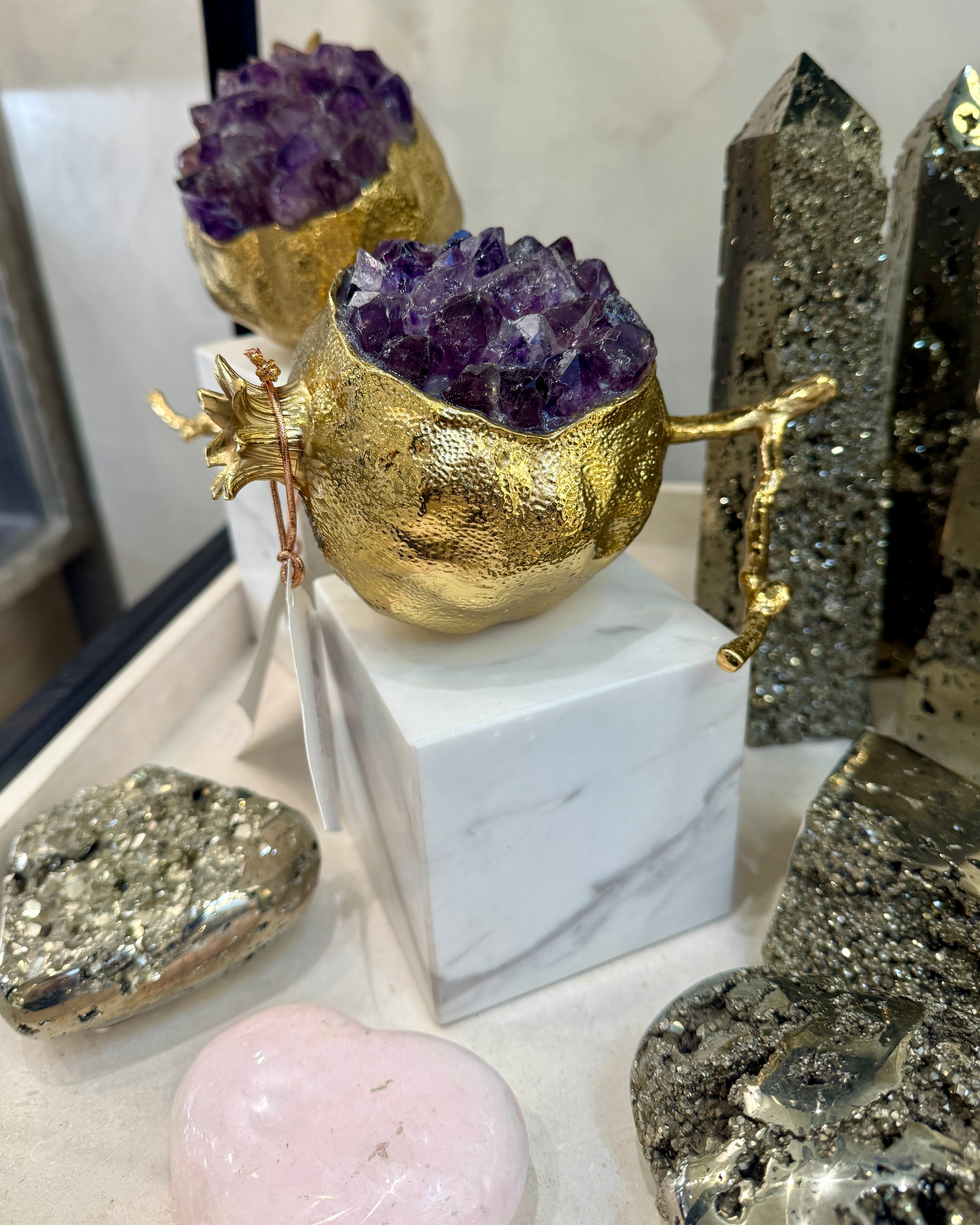
Every object in a room was made by someone. The sofa was upholstered, the lamp was wired, the porcelain was fired and glazed. A mineral is the exception. It was not made at all — it grew, slowly and without an audience, over spans of time that make the antique on the shelf beside it seem newly minted. This is the quiet argument for decorating with minerals: they introduce something into a room that no maker, however gifted, can supply.
Placed well, a specimen of amethyst or quartz functions as sculpture. Placed carelessly, it reads as a souvenir. The difference lies in a few unhurried decisions about scale, light, and company.
Choose one voice, not a chorus
The most common misstep is accumulation. A cluster of small specimens scattered across a room dilutes the effect of each; the eye registers clutter rather than wonder. Begin instead with a single piece substantial enough to hold its ground — on a console, a coffee table, or a deep bookshelf. One commanding geode will do more for a room than a dozen modest ones, and it leaves space for the piece to be seen the way it deserves: alone, and slowly.
Let the light do half the work
Minerals are creatures of light. Crystalline pieces — quartz points, amethyst cathedrals — come alive near a window or beneath a lamp, where facets catch and return the light throughout the day. Denser, opaque specimens ask for the opposite treatment: raking side-light that throws their texture into relief. Before settling on a final placement, move the piece through the room at different hours. The right position tends to announce itself in late afternoon.
Pair stone with what it is not
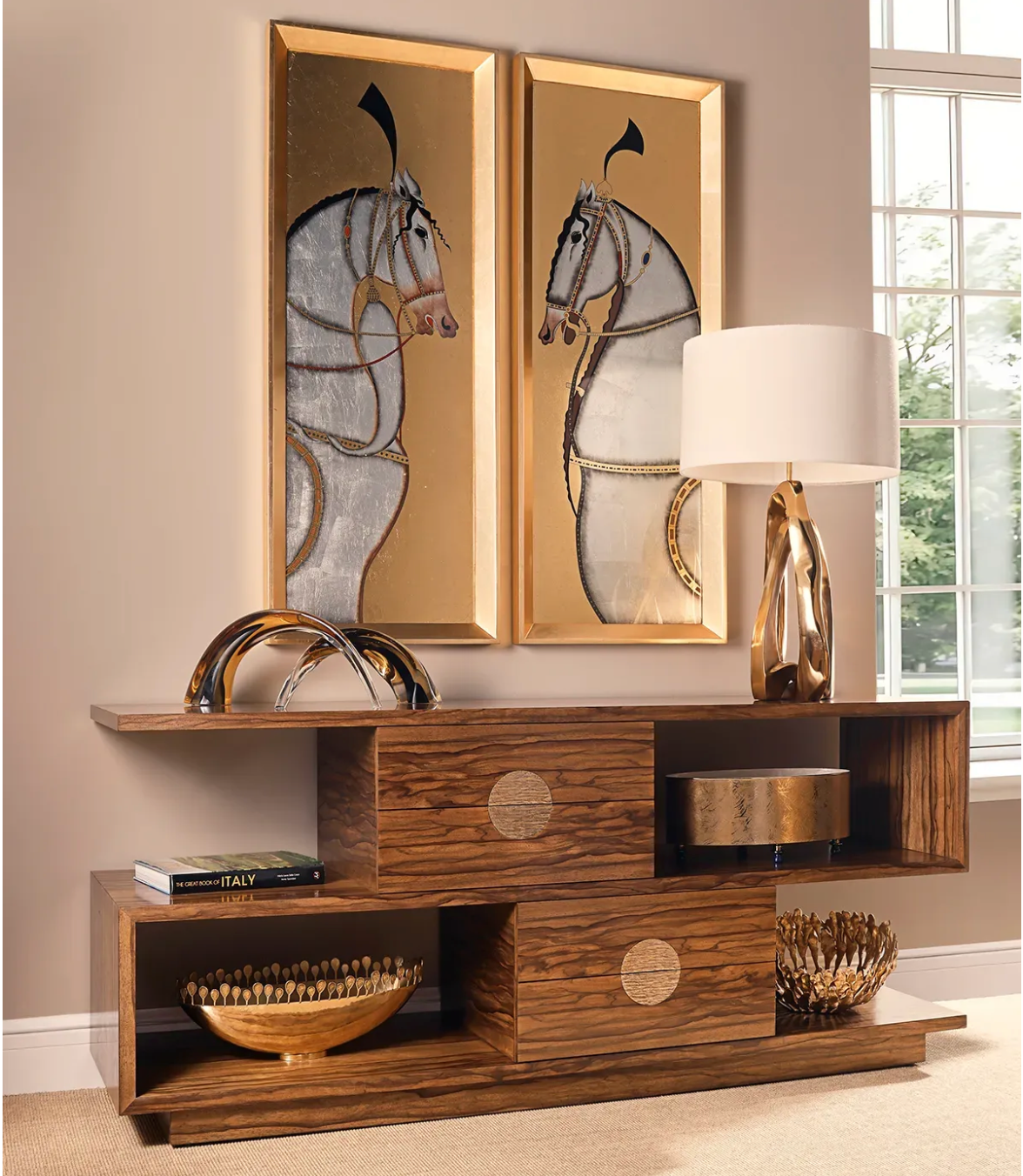
A mineral beside another hard, cold surface loses some of its drama. Set it instead against contrast — the warmth of wood, the softness of linen, the sheen of forged iron or aged brass. On a bookshelf, a specimen earns its place among leather spines and framed photographs precisely because it is unlike everything around it. This is the same principle that governs any good room: tension between materials, resolved by composition.
Respect the object's weight, in every sense
Substantial specimens are heavy, and their placement should acknowledge it. A large piece belongs on a surface of real solidity — a stone-topped console, a sturdy credenza — never perched at the edge of something delicate. Visually, the same rule applies. Give a mineral a low, grounded position in the room's composition and it lends the entire space a sense of permanence. Dust it with a soft, dry brush; keep vividly colored pieces such as amethyst out of prolonged direct sun, which can fade them over years. An object that took ages to form deserves a small measure of patience in return.
The surest way to choose a mineral is in person, where weight and light can be judged honestly — though a considered eye travels well. Our mineral collection gathers specimens selected for presence rather than novelty, from gemstones and crystals to sculptural mineral objects for the home. And if you are weighing where such a piece belongs in a larger room, our interior design service begins exactly there.